A rally is a timed competition conducted over closed sections of road, linked by public-road transfers and operational areas. Understanding the distinction helps spectators interpret schedules and avoid assuming that a stage is open or accessible.
How an event is structured
Most rally formats combine competitive stages with road sections between them. On a stage, crews drive against the clock under event rules. On a transfer, they travel between locations while observing applicable road laws and event instructions. The route may include repeated stages, regrouping, technical checks and a service interval. The exact sequence varies by series and event.
A competition weekend may include administrative checks, scrutineering, a shakedown or qualifying activity where applicable, then one or more competition days. These are common components, not a guaranteed template. The published itinerary is the controlling source for a particular event. Do not use an old schedule to plan a current trip.
Timing and the running order
Rally timing is more than a start time. A crew may receive a time to report at a control, a stage start time and a recorded finish time. Penalties can apply under regulations when a crew reports late or misses a control. Spectator-facing schedules may show approximate activity windows rather than a promise that a vehicle will pass at an exact minute.
Build flexibility into your plan. Delays, incidents, weather or operational decisions can affect the running order. If an official notice revises access or timing, follow that update rather than a third-party post, saved screenshot or printed copy that may be outdated.
Service areas and event hubs
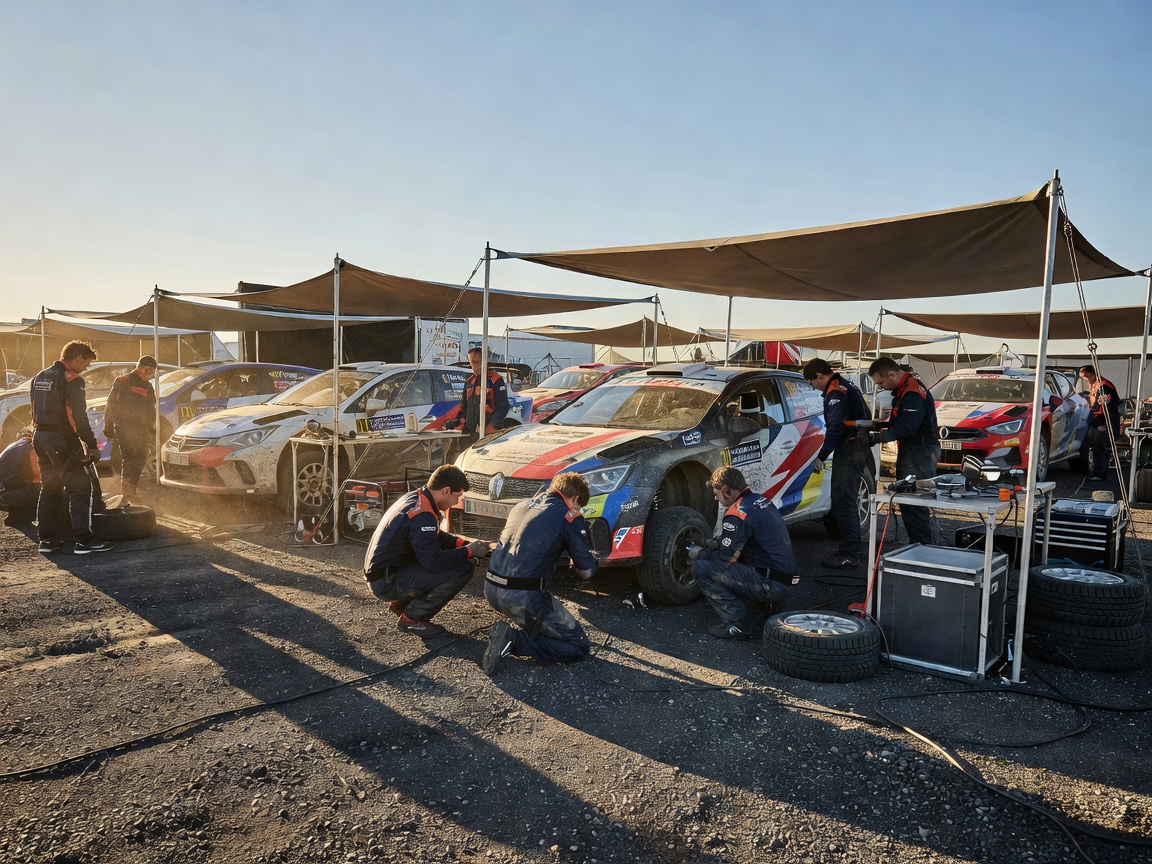
A service area gives teams a controlled place to inspect and maintain vehicles between competition sections. It can also be a useful place for visitors to understand the technical side of rallying, when public access is explicitly permitted. Service zones may have vehicle routes, pedestrian lanes, restricted work areas and rules about where visitors can stand. Never cross a taped boundary or approach a moving competition car to obtain a photograph.
Some events use a central service location; others may use a remote service, tyre zone or regroup area. These terms describe different operational functions. Check the event map and access guidance instead of assuming that every marked facility is open to spectators.
Regional differences and research
Baltic events take place across varied landscapes and road networks. Forest roads, agricultural districts, coastal conditions and paved links can all influence route design and travel planning. Differences in local traffic arrangements, language, parking or spectator access are event-specific. They should be confirmed from current organiser information, not inferred from a neighbouring country’s previous event.
Start with the official event or organising-body site. Find the latest itinerary, spectator guide, stage map, road closure notice, ticket or entry information where applicable, and emergency updates. Check when the information was published. Cross-reference practical transport details with local authorities or transport operators when needed. If a detail is absent, ask the organiser; do not treat absence as permission.
Compare event formats before choosing
A short-format event may suit a one-day visit with fewer travel transitions. A multi-day event can offer more varied stages and service activity, but it demands more planning and may require overnight accommodation. A central service park can simplify orientation; dispersed routes can increase the distance between viewing areas. These are planning trade-offs, not quality rankings. Choose around available time, mobility, transport and confirmed public access.
Good for
This guide is useful for first-time visitors, travelling groups and anyone comparing event layouts before booking transport. It also gives rally followers a checklist for separating competitive activity, road transfers and service operations.
What to know
- Schedules, prices, access rules and road closures can change.
- Use the latest official itinerary and spectator instructions.
- Stage operating times are not permission to enter a closed road.
- Follow marshal directions and remain in designated areas.
Plan the next step
Read the spectator planning guide for arrival and movement, or use the stage guide to compare surfaces and viewing considerations. For an editorial or accessibility enquiry, contact the guide desk.